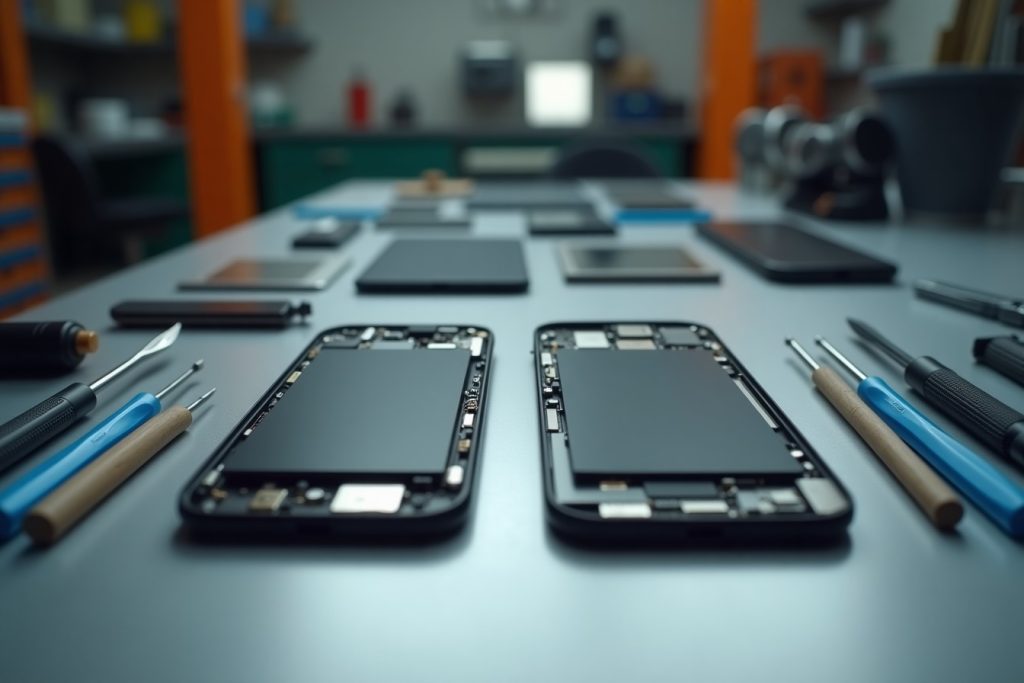
If you’ve switched between an iPhone and an Android phone at some point, you’ve probably noticed repairs don’t feel quite the same on either side — different costs, different wait times, sometimes different explanations for what actually went wrong. That’s not your imagination; the two ecosystems genuinely differ in how they’re built and repaired.
Neither one is simply ‘easier’ or ‘harder’ across the board — the differences show up in specific, practical ways worth knowing before you’re standing in a repair shop deciding what to do.
| Quick AnsweriPhone repairs tend to have more consistent parts availability and pricing since Apple only makes a limited number of models per year, while Android repairs vary widely by brand and model, sometimes with faster, cheaper parts for popular models and longer waits for less common ones. iPhones generally use more proprietary, tightly integrated components, which can make certain repairs (like Face ID or True Tone calibration) more involved than the Android equivalent. |
Key Takeaways
- iPhone parts tend to be more standardized across a smaller model range, which often means more predictable pricing and availability.
- Android repair costs and timelines vary more, since parts differ significantly across brands and even between models from the same brand.
- iPhones use more component-level calibration (like Face ID and True Tone) that Android phones generally don’t require after a repair.
- Android’s more modular hardware design, on some models, can make certain repairs like battery replacement more straightforward.
- Both ecosystems are fully repairable at a professional level — the differences are in process and cost, not in whether repair is possible.
Why the Repair Experience Feels Different
Apple releases a small, tightly controlled number of iPhone models each year, all built with a consistent design philosophy. Android, by contrast, spans dozens of brands and hundreds of models each year, each with its own internal layout, part specifications, and build quality. That structural difference is the root of almost every practical difference you’ll notice in a repair shop.
Side-by-Side Comparison
Factor | iPhone | Android |
Parts availability | Consistent across a smaller model range | Varies widely by brand and model |
Pricing predictability | Generally consistent for a given model | Varies more, even within one brand |
Repair calibration needs | Higher (Face ID, True Tone, etc.) | Generally lower |
Repair complexity for battery | Moderate — adhesive-mounted battery | Varies — some models easier, some harder |
Software lock-in after repair | Can flag non-genuine parts in settings | Rare, brand-dependent |
Model diversity to support | Low — a handful of active models | High — many active models and generations |
Where iPhone Repairs Get More Involved
- Face ID recalibration — screen and TrueDepth-related repairs need the sensor properly reconnected and functioning, not just physically swapped.
- True Tone display calibration — screen replacements on newer iPhones can affect this color-matching feature if not handled with the right process.
- Software part-pairing — iPhones can display a warning about non-genuine parts in settings after certain repairs, even if the repair itself works perfectly.
- Tightly integrated internals — components are densely packed, requiring more careful disassembly for some repairs.
Where Android Repairs Get More Variable
- Parts availability can be excellent for flagship models from major brands, but slower for less common or older models.
- Build quality and repairability differ significantly brand to brand — some models are genuinely easier to open and repair than others.
- Software behavior after a repair is generally more predictable, with less risk of persistent on-screen warnings about parts.
- Battery replacement can be more straightforward on some Android models, depending on how the battery is mounted internally.
Does One Cost More to Repair Than the Other?
It depends more on the specific model and issue than on iPhone versus Android as categories. A flagship Android phone’s screen can cost similarly to an iPhone screen of a comparable generation, while an older or budget Android model is often cheaper to repair simply because parts and labor are less specialized. iPhones tend to have more consistent, predictable pricing precisely because there are fewer models to account for.
Does the Brand Affect Repair Quality?
Not inherently — a well-equipped shop with experienced technicians repairs both ecosystems to the same standard. The difference is more about process: an iPhone repair might include an extra calibration step an Android repair wouldn’t need, while an Android repair might involve a bit more research into that specific model’s internal layout before starting. Neither makes the end result less reliable when done properly.
What to Expect Getting Either Fixed in Sharjah
Whether you’re carrying an iPhone or an Android device, professional repair covers all major brands under one roof, with a free quote specific to your model, same-day service for common repairs, and a 6-month parts warranty regardless of which ecosystem your phone belongs to.
Frequently Asked Questions
Is it cheaper to repair an Android phone than an iPhone?
It depends on the specific model — budget Android phones are often cheaper to repair, while flagship Android models can cost similarly to a comparable iPhone.
Why does my iPhone show a warning about my screen after repair?
iPhones can display a part-pairing notice in settings after certain repairs, even when the repair itself is done correctly and the phone functions normally.
Does Face ID need special handling during iPhone repair?
Yes, screen and camera-related repairs near the TrueDepth sensor need careful reconnection and calibration to keep Face ID working properly afterward.
Are Android phones easier to repair than iPhones?
It varies by model — some Android phones are more modular and easier to open, while others are just as tightly integrated as an iPhone.
Can one repair shop handle both iPhone and Android repairs?
Yes, a shop with broad technical experience typically services all major brands, though the specific process differs slightly between ecosystems.
Does brand affect how long a repair takes?
Sometimes, mainly due to parts availability for less common models, but most common repairs on either ecosystem are completed same-day.
The Bottom Line
iPhone and Android repairs aren’t better or worse than each other — they’re just different processes shaped by how each ecosystem is built. iPhones tend to be more predictable but need more calibration steps; Android varies more by model but can be simpler on some devices. Either way, a shop experienced across both brands gets you the same result: a properly working phone, backed by a 6-month warranty.